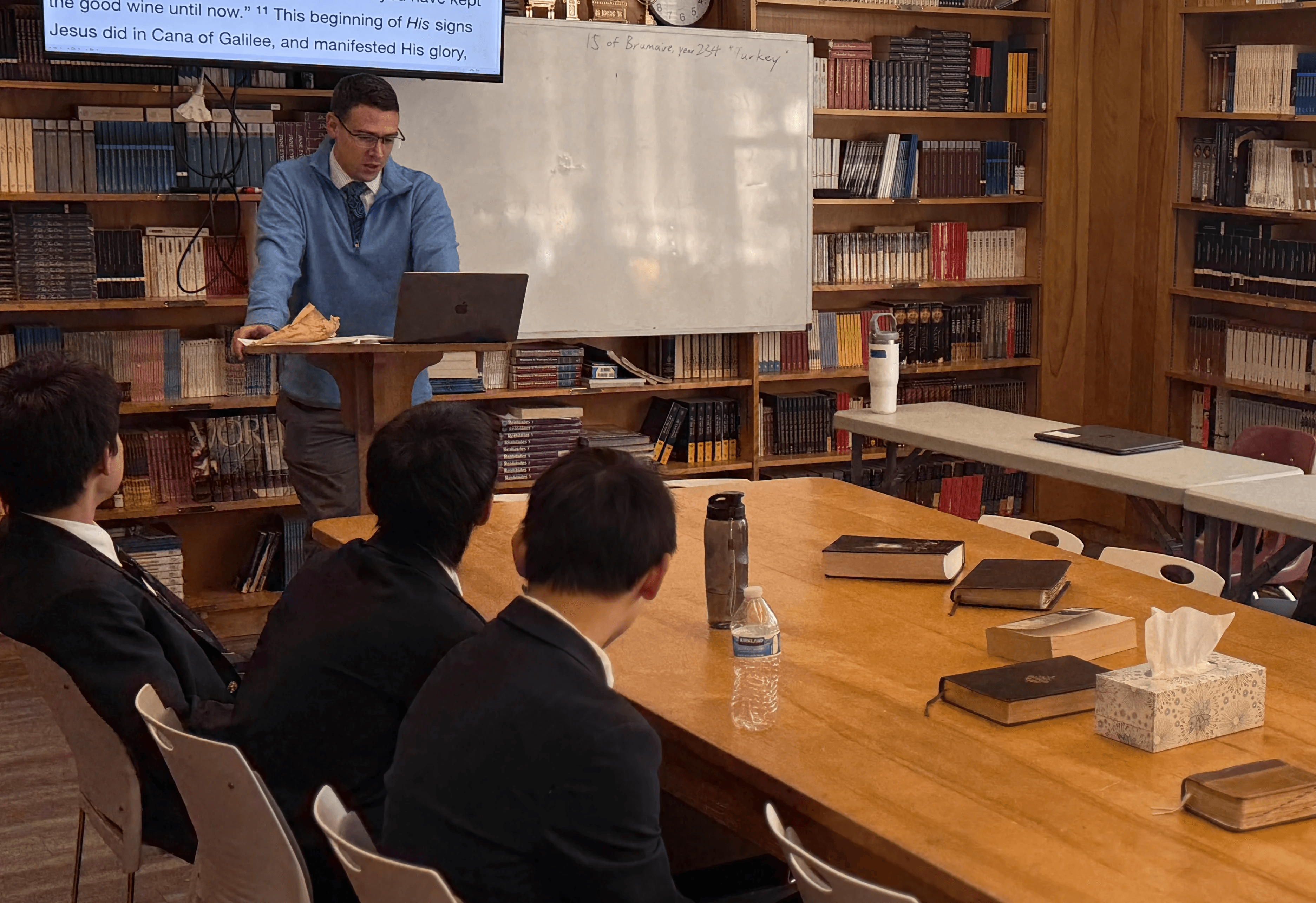
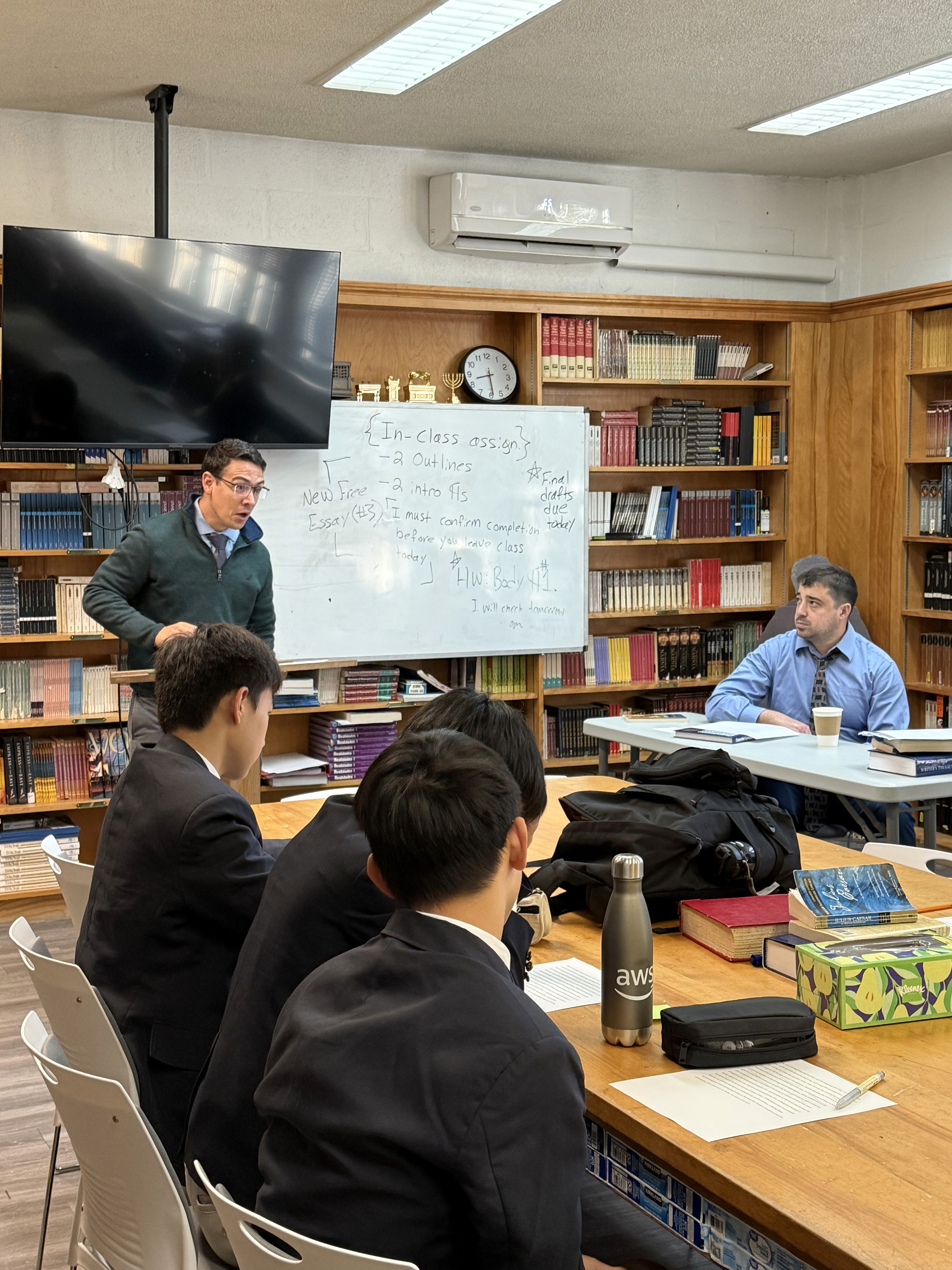
In the Logic Stage (7 – 8) of the Trivium, students begin to form their knowledge into ordered relationships. The goal is to equip students with the thinking skills necessary to recognize sound arguments and to detect and correct fallacious ones. This stage addresses the questions of how and why.
Philosophy: Teach Them to Think!
Veritas Collegiate Academy Classical Logic School Curriculum
The Veritas Collegiate Academy Classical Logic School serves students in Grades 7–8, guiding them from the foundational learning of the Grammar School into the analytical and argumentative work of the classical tradition. Students learn to organize knowledge, recognize relationships, evaluate ideas, and communicate conclusions with clarity and precision.
Logic: Logic, Rhetoric & Composition Students study formal and informal logic, including definitions, sound reasoning, valid arguments, and common errors in thinking. They develop analytical and persuasive writing by organizing arguments, supporting claims with evidence, and revising for clarity, accuracy, and style. Students also strengthen oral communication through discussion, presentations, and structured debate.
Bible & Christian Thought: Students study Scripture with increasing attention to context, doctrine, interpretation, and application. They examine biblical themes in relation to Christian worldview, ethics, history, and culture. Students learn to articulate their beliefs thoughtfully, evaluate competing ideas, and connect biblical truth to personal responsibility and daily life.
History & Civics: Students study the development of civilizations, institutions, ideas, and governing principles. They examine major events and movements in Western and American history, considering their causes, consequences, and lasting influence. Students also study the foundations of government, law, citizenship, liberty, and responsibility.
Mathematics: Students develop mathematical fluency, reasoning, and problem-solving skills through a rigorous sequence of study. They strengthen conceptual understanding, accurate application, clear explanation, and recognition of mathematical relationships. Consistent practice and cumulative review prepare students for increasingly advanced mathematical work.
Latin: Students advance their understanding of Latin vocabulary, grammar, translation, and language structure. They strengthen English vocabulary and reading comprehension while developing precision, discipline, and attention to detail. Students also apply Latin to the study of history, literature, theology, science, and law.
Literature & Reading: Students read increasingly complex literature and analyze character, plot, theme, structure, language, and worldview. They support interpretations through discussion and written responses grounded in textual evidence. Students also examine how literature reflects the historical, philosophical, and moral ideas of its time.
Science: Students progress from observation toward explanation, analysis, and evidence-based reasoning. Through reading, discussion, investigation, experimentation, and written communication, they study major scientific concepts. Students learn to formulate questions, evaluate evidence, identify patterns, and communicate conclusions responsibly.
Research & Independent Study: Students develop skills for advanced academic work, including research, note-taking, source evaluation, organization, citation, and presentation. They complete projects that require them to synthesize information from multiple sources and communicate their findings through written, visual, and oral formats. The Veritas Difference The Classical Logic School curriculum is intentionally integrated. Students reason carefully in mathematics, interpret faithfully in literature and Scripture, evaluate evidence in science, understand cause and effect in history, and communicate persuasively across every subject. Through this stage of study, students become increasingly thoughtful, articulate, discerning, and intellectually disciplined. They are prepared for the next level of classical education with the ability to ask meaningful questions, evaluate ideas, defend conclusions, and pursue truth with humility and confidence.